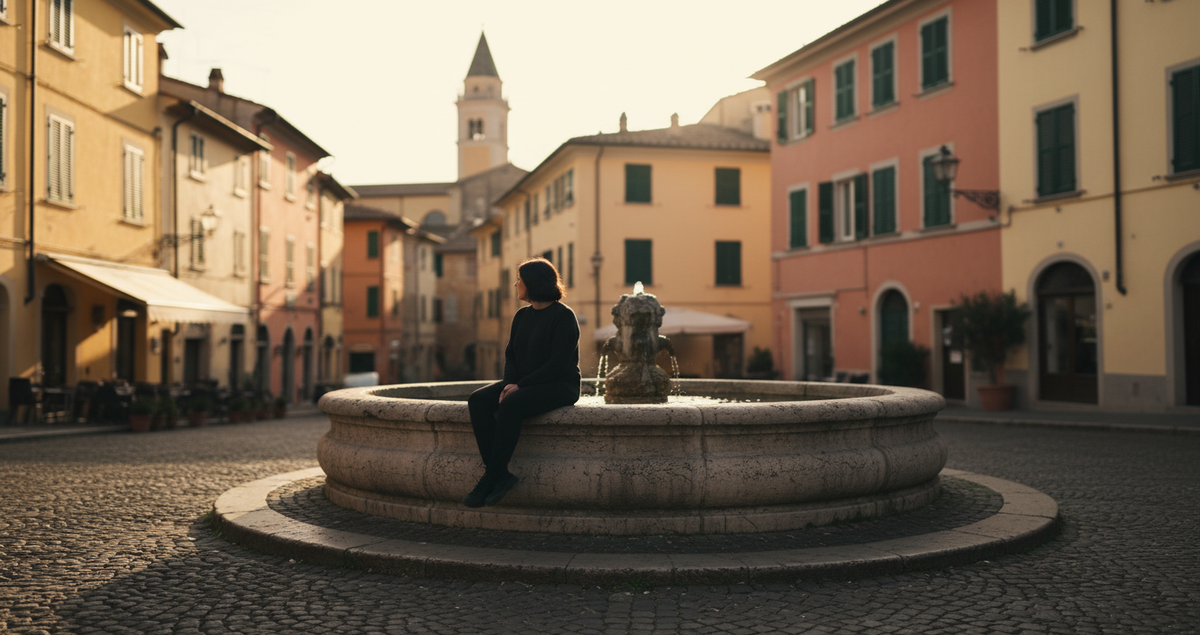
Quando si è confinati in una stanza con gli occhi chiusi, il mondo sembra piuttosto lento. Vivere da soli invece di socializzare costantemente può offrire un’esperienza molto diversa. Questo articolo cerca di evidenziare i vantaggi che, secondo la letteratura e la pratica clinica, spesso accompagnano la possibilità di trascorrere del tempo da soli. Alcune osservazioni sono personali, mentre altre derivano dallo studio e dalle conversazioni con i colleghi. Ho cercato di offrirvi un modo per comprendere queste cose in prima persona.
An important distinction
Before we dive in: don’t confuse a preference for solitude with endured solitude. There’s a practical difference between being forced to be alone and choosing to be alone. Research shows that the motivation behind time alone matters greatly for well-being. A genuine choice can be a source of growth; forced solitude can be debilitating.
“Self-determined motivation for solitude reflects the ability to choose alone time for personal values and interest, not for escape or social punishment,” says Thuy-vy T Nguyen, a psychology researcher at Durham University.
Traits that often accompany a preference for solitude
1. Pronounced self-awareness
It’s not just romantic introspection. Those who prefer solitude have often developed a concrete habit: observing their impulses, distinguishing emotions and motivations, questioning daily choices. This doesn’t prevent mistakes; these individuals simply tend to use them as data rather than personal scandals. In my experience, the person who spends hours alone organizing notes or thoughts possesses a form of cognitive self-control that others confuse with coldness.
2. Ability to concentrate deeply
Silence provides mental continuity. Personal and professional experiences show that persevering with complex problems often requires uninterrupted hours that modern social life doesn’t allow. Those who choose solitude tend to cultivate that sustained mental effort that many underestimate: it’s not escapism, it’s unobtrusive mental work.
3. Selectivity in relationships
Preferring a few authentic interactions to a multitude of superficial encounters isn’t snobbery. It’s an emotional strategy: conserving emotional resources for meaningful connections. Lonely people often build very small circles where trust is measured, not proclaimed. This leads to intense but fewer relationships; some might call it selfishness, I call it emotional economy.
4. Emotional independence
Not depending on others to feel complete is rare and not always comfortable. If emotional autonomy is present, solitude becomes a choice, not isolation. Sometimes it pays off in peace of mind, other times it exposes one to criticism because others don’t understand that it’s not a matter of indifference but of self-regulation.
5. Sensitivity to excessive stimuli
There’s a difference between someone who’s shy and someone who’s overstimulated. Some people react physically to noise, bright lights, and simultaneous conversations. For them, solitude isn’t boredom but relief: the body demands quiet before the mind does. This isn’t always visible; it often masks itself behind an efficient but draining social presence.
6. Ability for creative introspection
Solitude creates space for original thought. It’s not a guaranteed formula for art, but many complex ideas are born away from the hustle and bustle of everyday life. I’ve seen colleagues solve professional problems during solitary walks or nights of silent reading. Creativity, in these cases, is less performance than incubation.
7. Stable sense of identity
When you don’t seek constant external validation, you discover what truly moves you. People who choose solitude often display a less volatile identity. This doesn’t make them impervious to change; on the contrary, they often allow themselves to evolve without drama because their internal compass is always there, used regularly.
8. Patience and tolerance for uncertainty
Time alone teaches perseverance. Focusing on long-term goals is costly when the world demands instant results. Solitude accustoms us to living with slow, nonlinear processes, and this attitude is an advantage that isn’t evident in a culture that celebrates urgency.
Personal Reflection: Solitude as a Tool, Not a Brand
I believe that solitude, practiced consciously, is a tool. It won’t always bring happiness without problems, and it’s not a shortcut to becoming “better.” Some use it to work, others to heal wounds. Sometimes it’s a choice, other times it’s a survival strategy. My opinion is that we should respect those who practice it without mythologizing it: it’s not a vow of purity, it’s one way among many to be in the world.
When preference can hide something else
Not everything that appears to be a choice is genuine. Preferring solitude may conceal unresolved social anxiety, experiences of ostracism, or avoidance practices in the face of unresolved conflicts. The line between healthy choice and pathological avoidance is not always clear; this requires attention and, when necessary, professional discussion.
Perché scegliere la solitudine spesso riflette una forte regolazione interna, non un ritiro sociale
Da una prospettiva psicologica, la preferenza per la solitudine è spesso legata meno al rifiuto degli altri e più alla gestione efficiente degli stati interiori. Molti individui che scelgono un’esposizione sociale limitata praticano una forma di regolazione emotiva e cognitiva che avviene in silenzio e senza sfarzi. Non evitano l’interazione; la calibrano. Questa distinzione è cruciale, ma spesso trascurata nei dibattiti popolari che equiparano la presenza sociale alla salute psicologica.
La ricerca in psicologia dell’autoregolazione e della personalità suggerisce che le persone variano notevolmente nel modo in cui ripristinano l’energia mentale. Per alcuni, la stimolazione ripristina la vitalità; per altri, la esaurisce. Chi appartiene a quest’ultimo gruppo spesso impara – a volte fin da piccolo – che la solitudine è il modo più affidabile per ripristinare l’attenzione, le emozioni e la capacità decisionale. Col tempo, questa consapevolezza diventa conoscenza incarnata piuttosto che una strategia consapevole.
Ciò che esternamente appare come ritiro può internamente fungere da mantenimento. La solitudine permette a questi individui di elaborare le esperienze senza interruzioni, integrare i segnali emotivi e ripristinare la coerenza cognitiva. Questo processo non è passivo. Implica un’attenta selezione mentale, un’elaborazione emotiva e una pianificazione futura. In molti casi, la solitudine previene il burnout, l’irritabilità e i comportamenti reattivi che altrimenti danneggerebbero le relazioni.
È importante sottolineare che questa forma di regolazione non è antisociale. Molte persone che preferiscono la solitudine attribuiscono comunque un profondo valore alle relazioni; semplicemente, le affrontano con intenzionalità. Entrano negli spazi sociali quando possono essere presenti piuttosto che performanti, attenti piuttosto che sopraffatti. La loro assenza non è indifferenza, ma preparazione.
In ambito clinico, ho notato che gli individui con una preferenza stabile per la solitudine spesso dimostrano una maggiore tolleranza al disagio interiore. Riescono a sopportare questioni irrisolte senza precipitarsi verso distrazioni o rassicurazioni. Questa capacità li rende più lenti a reagire, ma più precisi nelle loro risposte. In una cultura che premia l’immediatezza, tale moderazione viene spesso interpretata erroneamente come distacco.
Considerare la solitudine una scelta regolativa piuttosto che un deficit aiuta a smantellare una narrazione semplicistica. Ci ricorda che la salute psicologica non si misura in base alla visibilità o alla frequenza delle interazioni, ma in base alla qualità dell’impegno, sia con gli altri che con se stessi.
Open conclusion
Recognizing these traits doesn’t mean labeling people. Instead, it’s an invitation to reinterpret behaviors that society tends to frame as anomalies. A preference for solitude often conceals psychological resources that deserve visibility: cognitive discipline, critical thinking, and creative abilities that thrive in silence. At the same time, I admit I don’t want to define every situation: the human world remains more complicated than a list of qualities.
Summary table
| Treatment | Quick Description |
|---|---|
| Self-awareness | Tendency to observe and regulate one’s internal states |
| Deep concentration | Ability to perform prolonged mental work without interruptions |
| Relational selectivity | Preference for intense and less numerous ties |
| Emotional independence | Affective self-regulation without constant need for approval |
| Sensitivity to stimuli | Reactivity to noise and chaos that pushes one to seek quiet |
| Creative introspection | Space for ideas and imaginative processes |
| Stable identity | Internal awareness that guides choices |
| Patience | Ability to tolerate slow processes and uncertainty |
FAQ
1. Does being lonely mean being unhappy?
Not necessarily. Solitude chosen and experienced with clear goals can coexist with well-being. However, forced or misunderstood solitude can be related to distress. The quality of solitude and the meaning a person assigns to it are important.
2. How to distinguish conscious preference from avoidance?
Conscious preference is accompanied by a sense of choice and perceived benefits: creativity, rest, concentration. Avoidance often leads to feelings of guilt, anxiety, or involuntary isolation. If a sense of control is lacking, it’s likely not an authentic choice.
3. Does solitude foster creative thinking for everyone?
For many people, quiet helps them process things deeply, but this isn’t universal. Some find creative stimulation in conversation with others. It’s an individual matter: solitude is a tool that works well for certain mental processes, but it’s not the only path to creativity.
4. Do the traits listed indicate a disorder?
Traits are not disorders in themselves. They can coexist with healthy adjustment or psychological difficulties. The diagnosis depends on the person’s overall daily functioning and reported suffering, not on a single characteristic.
5. What happens if the social context changes?
Preferences and motivations adapt: a different job, a move, a loss can transform someone’s relationship with loneliness. Flexibility is real: choosing to be alone today doesn’t mean you’ll live a solitary life tomorrow.
6. Can I consciously cultivate some of these traits?
Yes. Reflection practices, scheduled non-social breaks, and activities that require sustained attention can enhance traits like concentration and self-awareness. It’s not about becoming someone different, but about expanding useful skills.
If you recognize yourself in more than one of these traits, don’t immediately seek definitions: observe how they work in your life. Solitude, when managed carefully, can be a place where important resources are built. And if you feel like it’s taking more from you than it gives, talking about it is never a surrender, it’s a choice.
