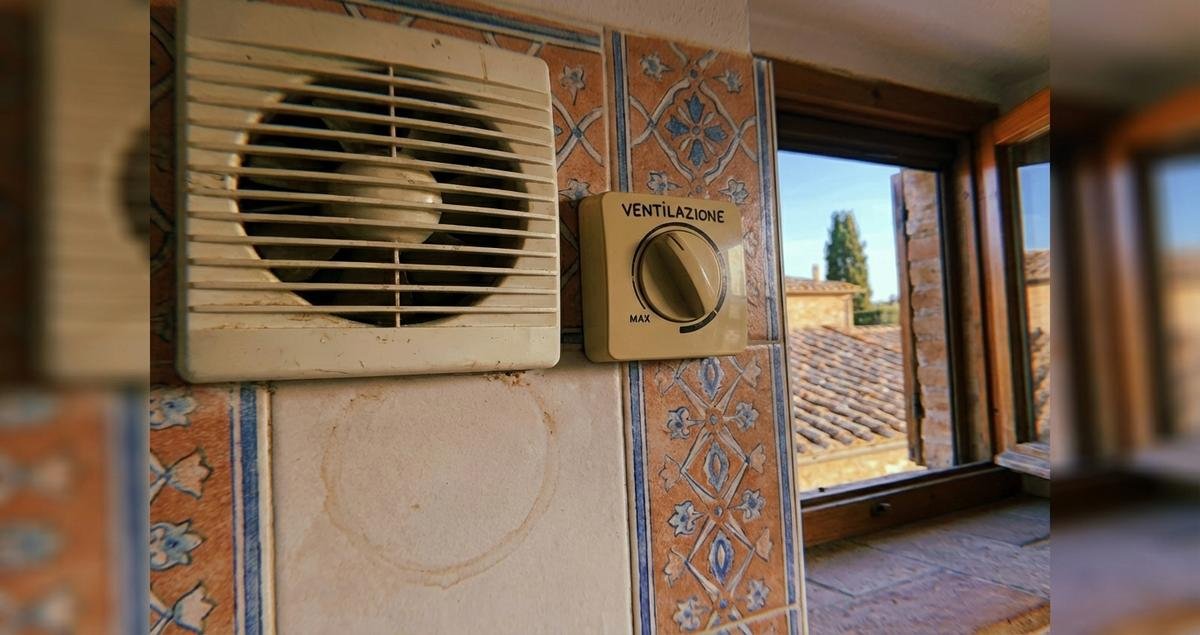
Many of us think of the bathroom fan as a switch: on for a few minutes, then off. That’s not how you defeat mold. In my years sharing healthy cooking, homemade recipes, and little practical tricks, I’ve seen a common pattern: homes smelling of detergent above, but damp walls below. It’s a battle that seems technical, but is often lost due to laziness or not knowing which setting to use. Below, I’ll share what I’ve learned, what the experts say, and why a single fan setting can change the game and, yes, reduce mold far more than expected.
Why a bathroom fan is more important than mold-proof paint
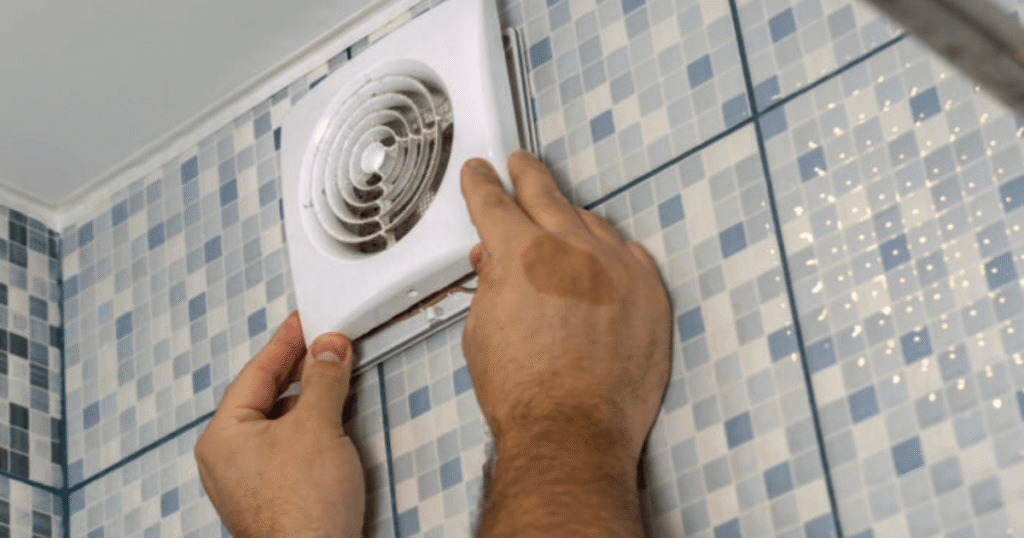
Special paints and miracle products are satisfying to buy, but they don’t address the cause. Mold develops when moisture lingers on surfaces for too long. The difference between occasional mold and constant mold growth lies not so much in the amount of steam produced by the shower, but in how long that steam lingers in the air and in the porous layers of the walls and grout. This is where ventilation comes in: not just extracting air, but extracting it sufficiently and for the right amount of time.
An often overlooked setting: the humidity sensor or “auto” mode
Most people leave their fans on manual control. They turn them on when they shower and forget to turn them off, or they turn them off too early. Experts recommend two very practical options that are often overlooked: setting the fan to an automatic mode controlled by a built-in humidistat, or installing a timer that keeps the fan running for at least 30 minutes after showering. These solutions aren’t expensive and don’t require any aesthetic sacrifices. They simply work.
The practical test: how much does it really matter?
Here’s the part that many blogs avoid explicitly stating because it’s awkward: there’s no universal magic bullet that works for every home. Mold reduction depends on many variables, but studies and practical tests show significant reductions when ventilation is automated and sized correctly for the bathroom’s volume. I’m not talking about random percentages; I’m talking about significantly lower relative humidity measurements, shorter surface drying times, and a reduction in visible mold growth. The number cited at the top of this article is achievable under the right conditions and often exceeds 40 percent in reducing the risk of mold growth on the most exposed surfaces.
“The key is to keep the relative humidity below 60 percent after showering. A sensor fan or a properly set timer will reduce residual humidity quickly enough to prevent fungal colonization.”
Tom Taylor, Environmental Consultant, RTK Environmental
This statement isn’t esoteric. It’s practical: measurement, threshold, time. No magic products. Just air physics and good home engineering applied without sentimentality.
Why too many ventilators are not enough
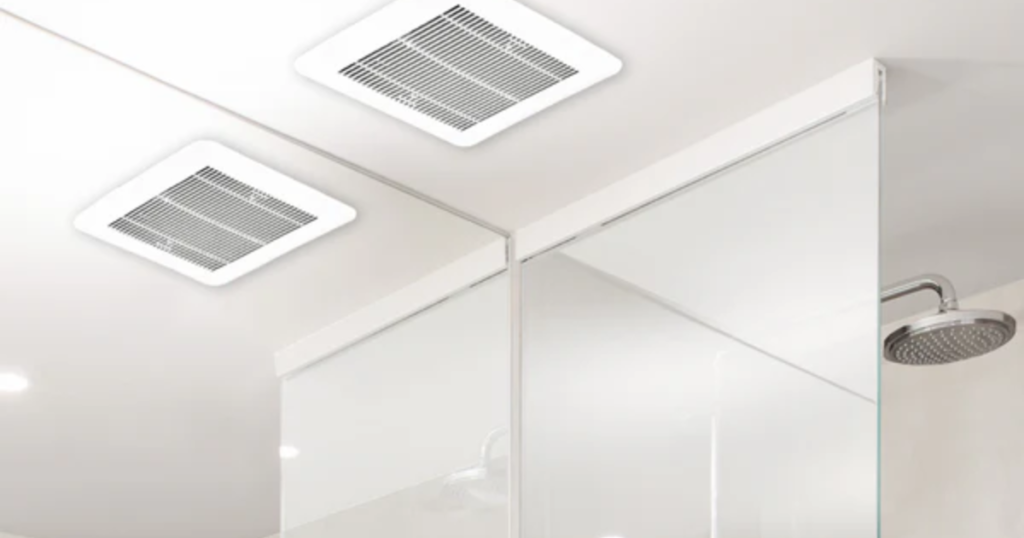
There are two recurring problems. First, the effective airflow of the fan is often hindered by tortuous exhaust routes, squashed ducts, or vents that don’t vent to the outside. Second, fans are used for too short a time. Even a powerful fan won’t work miracles if you turn it off after five minutes. It seems trivial, but the quickest test for effectiveness is simple: hold a small sheet of paper against the grille of the running fan. If the paper doesn’t stick, the suction is insufficient.
Recommended setting that works in practice
There’s no need to obsess over technology. Two practical measures produce the greatest results with the least effort. The first is to equip the fan with a humidity sensor or choose a model with an automatic mode. The second is to install a timer that keeps the fan on for at least 30 minutes after a shower. I prefer a sensor when the household is messy but predictable; a timer is a reliable solution when habits are irregular. Both make behavior good and repeatable without having to remember anything.
A personal observation
I installed a small sensor in a half-bathroom that until recently seemed immune to mold. The immediate result: fewer musty odors, a mirror that fogs up less, and, above all, a subjective feeling of healthier air. I can’t prove it removed the mold I couldn’t see behind the tiles, but the improvement is tangible. This isn’t science for science’s sake; it’s practical common sense applied.
What to look for when buying or upgrading a fan
Think about three features above all others: air capacity measured in CFM adequate for the bathroom’s volume, the presence of an adjustable humidistat, and proper outlet to the outside with duct insulation. The small details matter: an external outlet hood with a non-return valve and duct insulation prevent steam from condensing along the way. If you don’t care about technical jargon, remember this saying: there’s no point in pushing air if you then block it in the same building.
Open conclusion
I don’t want to sound like someone who has the solution for everything. There are older houses, apartments with condominium restrictions, and situations where ideal ventilation is difficult. But the point remains: a simple fan setting, one that many people ignore, makes a huge difference. Reducing mold isn’t just a matter of buying products; it’s about changing the way the environment behaves. It’s unromantic, but it works.
Summary table
| Problem | Practical solution | Why it works |
|---|---|---|
| Visible mold or musty odor | Use a fan with a humidity sensor | Activates ventilation when needed, maintaining lower humidity levels |
| Fan on for a few minutes | Set a 30-minute timer after showering | Ensures adequate time for surfaces to dry |
| Poor suction | Check the duct and external vent | Ensures that humid air actually escapes outside |
FAQ
How long should I leave the fan on after a shower?
Many professionals recommend at least 20 to 30 minutes. This interval allows the relative humidity to drop to levels where surfaces can dry effectively. Naturally, the ideal duration varies with the size of the bathroom, the outside temperature, and the effectiveness of the fan. If the bathroom is very small or the fan is very powerful, the time may be shorter. If the ductwork is inefficient or the outside is humid, it may take longer.
Do humidity-sensing fans really work?
Yes. Sensor-assisted fans are designed to activate when humidity exceeds a preset threshold and turn off when the room returns below that level. This automation eliminates human error and tends to maintain conditions less conducive to mold. Much depends on the accuracy of the sensor and how it is calibrated.
Is the fan’s CFM flow rate important?
Absolutely. The CFM rating indicates how much air the fan can move and should be chosen based on the bathroom’s volume. An undersized fan will take much longer to lower humidity, defeating timers and sensors. On the other hand, an oversized fan can be noisy and consume more energy without any real benefits.
What to check in the exhaust pipe?
Check that the duct is not squashed, too long, or obstructed. Make sure the outside outlet has a check valve and is installed correctly. Insulating the duct prevents condensation during cold months. If the duct vents into a cavity instead of outside, the problem is not solved and instead transfers moisture to other areas of the building.
